

Finding Calm Within Yourself: A Therapist’s Guide to Anxiety When Alone

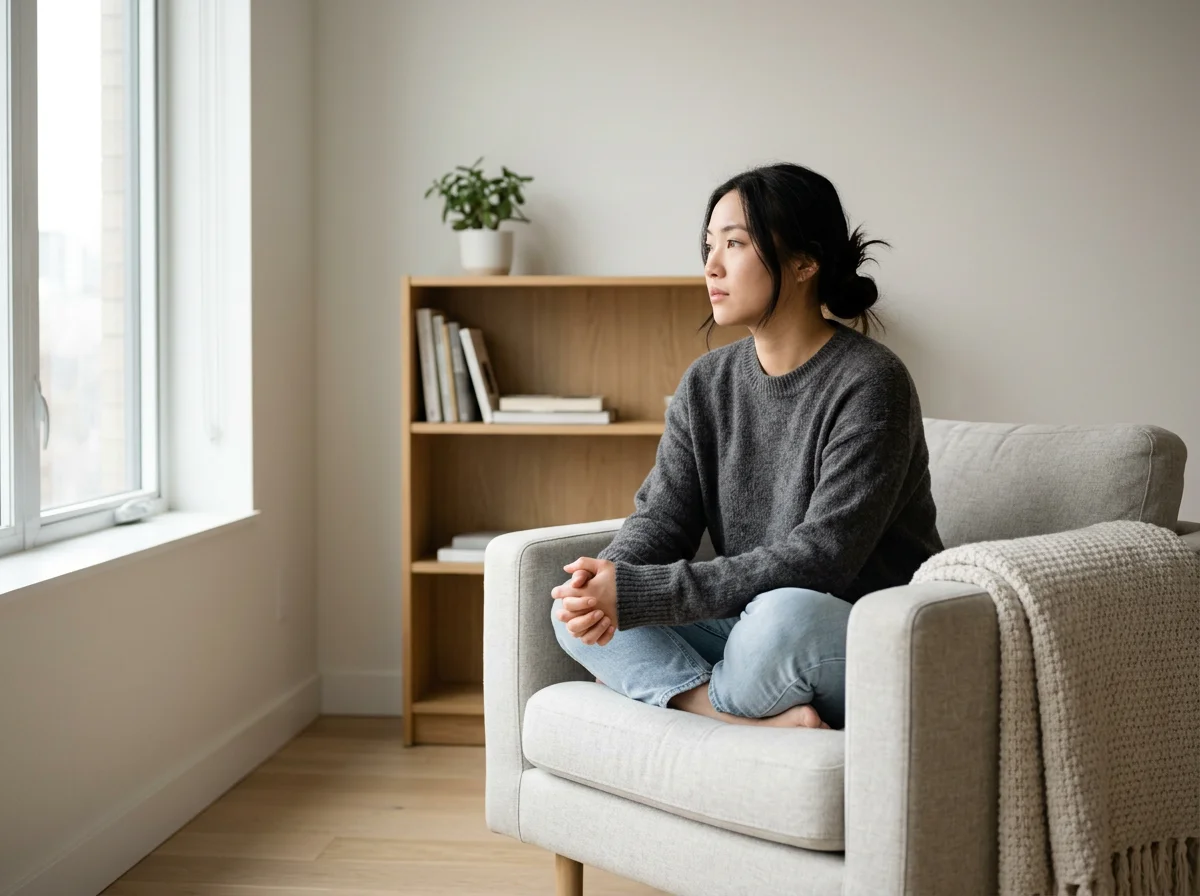
Have you ever looked forward to having time to yourself, only to find that the moment you’re alone, your mind starts racing?
You might begin replaying conversations, worrying about the future, questioning decisions, or imagining worst-case scenarios. What starts as a quiet evening at home can quickly turn into hours of overthinking. Even when nothing is immediately wrong, it can feel difficult to relax or reassure yourself that everything is okay.
If this sounds familiar, you’re not alone.
Feeling anxious when you’re by yourself can be exhausting, especially when you want to enjoy some peace and quiet but find yourself caught in a cycle of worry. You may wonder why your mind seems to get louder when everything around you gets quiet.
The good news is that you can learn to respond to anxious thoughts differently. With patience, self-compassion, and the right tools, it’s possible to feel more comfortable spending time alone without feeling overwhelmed by your thoughts.
Why Does Anxiety Get Worse When You’re Alone?
For many adults, being alone creates more space for thoughts and feelings that are easier to overlook during a busy day.
When you're working, socializing, caring for others, or managing daily responsibilities, your attention is often focused on what’s happening around you. Once those distractions fade, you may become more aware of your worries, emotions, and physical sensations.
This doesn't necessarily mean that being alone causes your anxiety. Instead, quiet moments may simply make existing worries more noticeable.
1. Your Mind Tries to Prepare You for Every Possibility
Anxiety often involves anticipating what could go wrong. Your mind may attempt to protect you by identifying potential problems before they happen. However, this can lead to getting stuck in a cycle of worrying about situations that haven't happened and may never happen.
You might find yourself thinking:
● What if something goes wrong tomorrow?
● What if I made the wrong decision?
● What if I can’t handle a difficult situation?
2. Quiet Moments Give Overthinking More Room
When your surroundings become quiet, your attention may turn inward. You might start questioning a conversation from earlier in the day or revisiting a decision you've already made.
Overthinking can create the illusion that if you think about a situation long enough, you'll eventually find the perfect answer or eliminate every possible risk.
Unfortunately, some questions don't have definite answers. Trying to answer them repeatedly can keep you stuck in the same cycle of worry.
3. You May Feel Uncomfortable With Uncertainty
For some people, anxiety when alone is connected to a need for reassurance or a sense of control.
When you're alone, that reassurance may feel less accessible. Your mind might begin searching for reasons to worry or imagining situations you'd rather avoid.
Learning to tolerate uncertainty doesn't mean pretending that nothing bad can ever happen. Instead, it means gradually recognizing that you don't have to solve every possible problem to feel okay in the present moment.
5 Ways to Manage Anxiety When You’re Alone
You don't need to master every strategy at once. Start with one or two approaches that feel manageable, and give yourself permission to practice imperfectly.
1. Acknowledge Your Thoughts Without Treating Them as Facts
When an anxious thought appears, often our first instinct is to assume that it’s true in nature.
That’s not always the case.
Instead, try examining the evidence that supports your anxious thought while also considering alternative explanations or outcomes. Ask yourself whether there is evidence that supports these other possibilities, too.
This small shift can help you recognize that your mind is responding to worry without automatically accepting every anxious thought as fact.
2. Bring Your Attention Back to the Present
Anxiety often pulls your attention toward the future or gets you stuck in the past.
Grounding techniques can help you reconnect with what is happening around you right now.
One simple exercise is the 5-4-3-2-1 grounding technique:
5 things you can see: Notice the furniture, colors, or objects around you.
4 things you can feel: Pay attention to your feet on the floor, your clothing, or the chair
supporting you.
3 things you can hear: Notice sounds inside or outside your home.
2 things you can smell: Identify familiar scents in your environment.
1 thing you can taste: Notice the taste in your mouth or take a sip of water.
The goal isn’t to force anxiety away. It’s to gently bring your attention back to your current surroundings instead of remaining absorbed in imagined scenarios.
3. Practice Slow, Comfortable Breathing
When you're anxious, your breathing may become quicker or shallower, which can contribute to feelings of physical tension.
Slowing your breathing can help you settle your body and create a pause before responding to anxious thoughts.
Try breathing in gently through your nose and breathing out slowly, without forcing deep breaths or holding your breath. Continue for several comfortable cycles.
Remember that calming techniques don't always work immediately. You are practicing a skill, not taking a test you need to pass.
4. Give Your Worries a Designated Time
Trying to solve every worry the moment it appears can make it difficult to focus on anything else.
One alternative is to set aside a short period during the day specifically for writing down and reviewing your concerns.
When a worry appears outside that time, acknowledge it and make a note of it.
During your designated worry time, consider asking yourself:
Is this something I can take action on?
What information do I actually have?
What is within my control?
Is there one small, practical step I can take?
If there is nothing I can do right now, how can I allow this question to remain unanswered for the moment?
Once your designated worry time has ended, transition to a different activity, ideally in a different environment, to help redirect your attention elsewhere.
5. Create a Gentle Routine for Time Alone
If you frequently feel anxious when you're by yourself, unstructured time may leave you feeling unsure of what to do with your attention.
Creating a simple routine can make alone time feel more predictable and enjoyable.
Prepare a meal you enjoy.
Take a short walk outside.
Listen to music or a podcast.
Work on a hobby that helps you feel engaged.
These activities aren't meant to help you escape every uncomfortable feeling. Instead, they give you opportunities to experience being alone while continuing to participate in your life.
When Should You Consider Therapy for Anxiety?
You don't need to wait until anxiety becomes unbearable to seek support.
Occasional worry is a normal part of life. However, when anxiety becomes persistent, overwhelming, or difficult to manage on your own, professional support can make a meaningful difference.
You might consider working with a therapist if you:
Spend significant amounts of time worrying or replaying situations in your mind.
Find it difficult to relax even when there is no immediate problem.
Avoid being alone because of the anxiety you experience.
Experience anxiety that interferes with sleep, work, relationships, or everyday activities.
Therapists at SG Therapy Group can help you understand the patterns contributing to your anxiety and develop strategies that work for your individual needs.

Learning to feel more comfortable being alone with your thoughts and emotions doesn't have to happen on your own. Taking the first step toward support can begin with a single conversation.

About the Author
Molly Adams, LCSW is a clinical social worker specializing in first responders, trauma & PTSD, grief, anxiety, and life transitions. She incorporates Mindfulness-Based Cognitive Therapy and Rogerian Therapy into her treatment. Read more about Molly here.
